.png)

Thermodynamics and Sustainable Energy Labroratory (TSEL)
Discover Sustainable Energy Solutions
International Networks and Collaborations
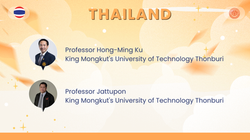 |  |  | 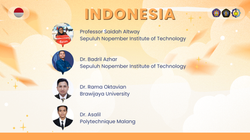 |
|---|---|---|---|
 |  | 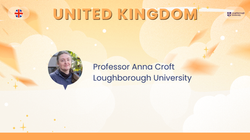 |  |

Taiwan Networks and Collaborations
.jpeg)
Professor Ming-Jer Lee
National Taiwan University of Science and Technology

Professor Shiang-Tai Lin
National Taiwan University

Professor Chie-Shaan Su
National Taipei University of Technology

Professor Hong-Gui Bing
National Taipei University of Technology

Professor Chieh-Ming Hsieh
National Central University

Professor Hsien Tsung Wu
Ming Chi University of Technology
Exchange Student Program
 |  |  |  |
|---|
Taiwan-France Internship Program
Taiwan and France internship is an Orchid Program from the collaboration of France and Taiwan via Campus France and National Science and Technology. We have received a two-year exchange program, and we sent two of Taiwanese students, 劉佳柔 and 林義壬, to visit ULCO, France. The students spent two weeks in France learning the thermophysical properties of deep eutectic solvents (DESs). The impact from this internship is that the students learn the fundamentals of chemistry and cross-cultural exchange between Taiwan and France. The additional benefits: the students gain the knowledge and increased their connection with France university for their future.
 |  |  |
|---|
Taiwan-Thailand Internship Program
Internships are now frequently advocated as an effective way to improve the employability of recent graduates. The evidence of the crucial role of practice-based learning exchanges ensured the university students are prepared for practical concepts when the students graduate. Focusing primarily on student learning outcomes, it tends to overlook several key elements of the internship experience. Internships are anticipated to become a significant focus for the higher education sector. Internships provide students with opportunities to gain practical experience, improve their professional and communication skills, and deepen their understanding of business operations and management. Additionally, international internships allow students to interact with local people across borders, learn about different cultural traditions, engage with scientific and technological experts from various countries, enhance their professional performance, communication, and interpersonal skills, and develop the ability to collaborate and build effective working models.
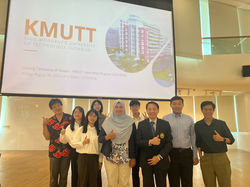
In 2016, the Ministry of Education enhanced multiple budgets to facilitate cross-border academic exchanges with Southeast Asian countries in response to the government's "New Southbound Policy." Since 2017, the Taiwan-KMUTT Internship Program (TKIP) has been implemented by King Mongkut's College of Technology Thonburi (KMUTT) for Taiwanese students who are completing an internship at KMUTT. The program's objectives are as follows:
1. KMUTT and Taiwanese interns conduct research in the research center or companies.
2. KMUTT and Taiwanese students conduct professional academic and exchange cultures.
3. Taiwanese students could engage and learn the practical skills in Thailand.
The internship in Thailand offers a chance to improve the academic and practical skills through the company or university. Students can earn academic credit and participate in customized internships in Thailand. Interns gain practical experience in a real workplace and benefit from comprehensive learning through exposure to a diverse cultural environment. They have the opportunity to apply academic knowledge to real-world business situations while earning academic credit. Thailand offers many advantages and attractions for international students. It is also the only destination for international students who wish to study Thai.
The New Southbound Learning and Dream Internship Program is anticipated to cultivate exceptional talents with an international outlook, enhancing both soft and hard skills. This initiative aims to increase competitiveness in the context of globalization and enable students to apply their knowledge acquired in Taiwan to contribute significantly to the nation's chemical industry.